

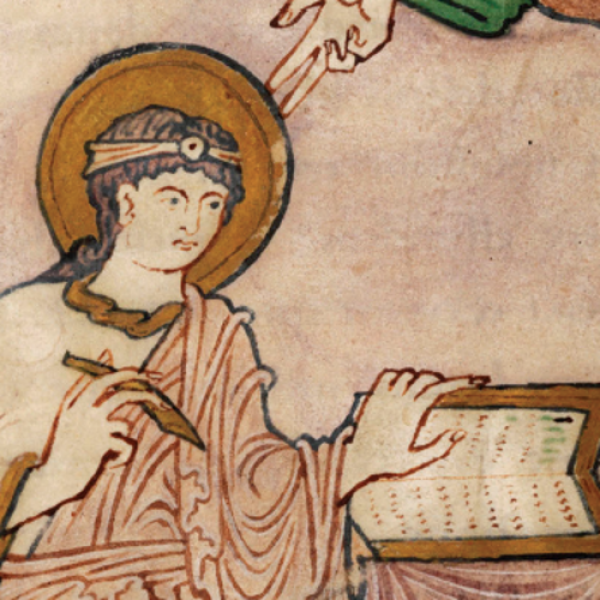

St Wulfstan lived c1008 - 1095. He served as Bishop of Worcester and after the Norman Conquest was responsible for the dismantling of the old Saxon cathedral and the building of a new one, of which the crypt is the main part still surviving today. He was at once venerated as a saint by the people of Worcester, though he was not formally canonized until 1203. Alongside the tomb of St Oswald, his shrine was a place of pilgrimage until the Reformation.
He left his mark on Worcester Cathedral's library, lands and diocese. He influenced the kings policy in combatting the Viking attacks which eventually overwhelmed the kingdom. Under the conquering king, Cnut, Wulfstan continued to guide national policy. He composed lawcodes for both kings and was a legislative innovator, protecting English rights. The road to Magna Carta starts with Wulfstan.
As a bishop, he was a reformer and preacher. His sermons in Old English are some of the most original writings in the development of English prose. Writing around the year 1000 Wulfstan’s preaching is notable for its hellfire warnings of the imminence of the End of the World. His staunch defence of the diocese against Viking invaders, greedy aristocrats and grasping kings ensured Worcester’s safety and stability during one of the most dramatic periods in English history.