

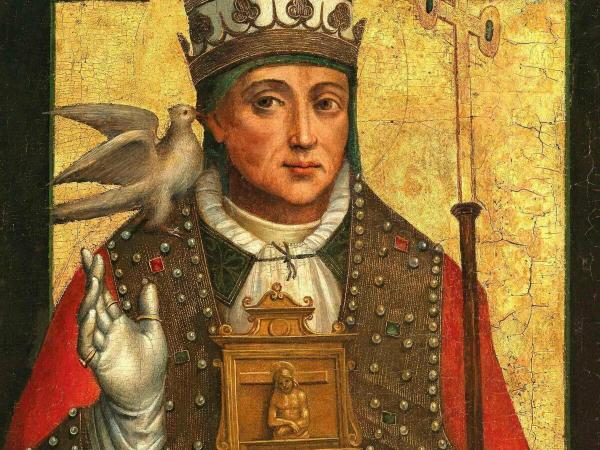
Saint Gregory the Great is known for instituting the first recorded large-scale mission from Rome, the Gregorian mission, to convert the then largely pagan Anglo-Saxons to Christianity. Gregory is also well known for his writings, which were more prolific than those of any of his predecessors as pope.
Gregory was born in troubled times and the church could act as a check against this new military aristocracy or could serve the secular ambitions of the strongmen. Gregory fought tirelessly against these latter corruptions.
Gregory may have had legal training before entering public service. His conversion to monastic life in 574 was not sudden but grew from a lifelong conflict between his personal desire for contemplative purity and the public duty to serve others. Renouncing secular life, Gregory established, on family property on the Caelian Hill, a monastery dedicated to St Andrew. Gregory also founded six more monasteries on family estates in Sicily but retained sufficient property to make later endowments to the church.
In 590 Gregory was elected pope, taking office unwillingly. As pope, Gregory faced numerous challenges, including those posed by the Lombards and the Byzantines. Gregory saw himself as the “treasurer” who paid the daily expenses of Rome and the “paymaster” of the Lombards. In conducting war, he planned strategies, funded soldiers, and directed diplomacy, twice preventing Rome from being sacked by the Lombards. He also ransomed hostages, supported refugees, secured the grain supply, and repaired aqueducts.
Realizing he could not defeat the Lombards militarily, Gregory repeatedly sought peace. After 600, relations between Lombard and Roman Italy improved greatly. Friendship and patronage had thus accomplished what military strategy and imperial policies could not.
He was very concerned about the conversion of England, sending 40 monks from his own monastery. He is known for his reform of the liturgy, and for strengthening respect for doctrine.